
By Jack Glennon
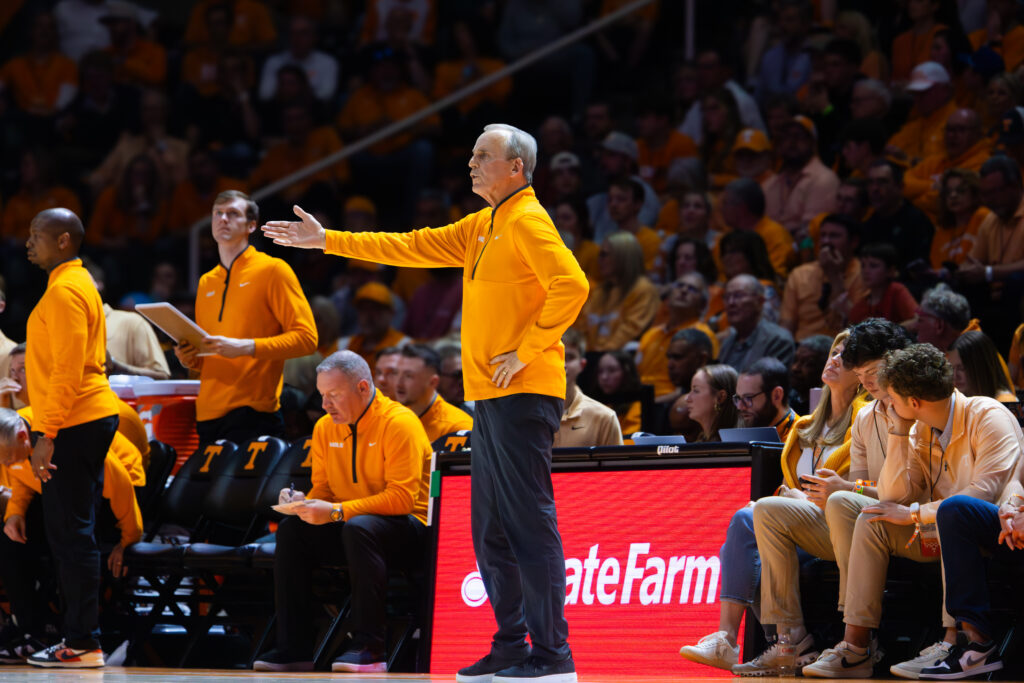
Hard-fought. Gritty. Hatred. These are a given for any Tennessee-Alabama clash, regardless of the sport.
Saturday’s matchup, a tale of two halves, was no exception, adding another instant classic to an already storied rivalry.
Alabama was able to leave Knoxville with a 71-69 victory.
The win, however, was far from a traditional victorious performance.
In fact, after 20 years of playing and watching basketball, I have never seen a box score so contradictory to the game’s final score.
Tennessee dominated Alabama in every statistical category.
The Volunteers outrebounded Alabama 47-30, outscored the Crimson Tide 40-26 in the paint, and outpaced Alabama 25-10 on second chances.
“We got destroyed [on the glass],” Alabama head coach Nate Oats conceded. “They had 16 more offensive rebounds.”
Furthermore, the Volunteers attempted 78 shots, 22 more than their opponent. They turned the ball over just six times. And yet, they lost.
“[It is] hard to win a game,” Oats explained, “When [you are] giving the other team 22 more shots.”
Alabama, which came into Knoxville as the SEC’s top scorers, made just one of its first seven shot attempts, also committing four turnovers in the first four minutes.
Unfortunately for the Crimson Tide, their first-half struggles did not end there. They managed to score just 28 points in the first half, shooting 37% from the field.
Instead of taking advantage of Alabama’s struggles, Tennessee had an anemic offensive performance of its own that kept the door wide open for Alabama.
The Volunteers started an ice-cold 2-for-11 from the field, and never found their rhythm offensively, finishing the game shooting a rather unimpressive 38% (22% from beyond the arc).
While Tennessee’s overall performance was satisfactory, the Volunteers still have painfully obvious shortcomings that must be addressed before postseason play.
For starters, the static Tennessee offense has held the team back significantly.
The Volunteer offense ranks ninth in the SEC in both FG% and 3PT%, and commits more turnovers than any team in the SEC.
The Volunteers also rank 14th in the SEC in FT%, converting on less than 70% of such shots.
Tonight, Tennessee’s offense converted on just 53% of its shot attempts at the rim, and shot just 35% on two-point attempts outside of the restricted area.
While the Vols’ defensive metrics are off the charts, it will not matter until they can find a consistent offensive identity.
For much of the year, Tennessee’s offense has revolved around Ja’Kobi Gillespie and Nate Ament, the only two Volunteers who have averaged double-figure scoring this season.
Tonight, Ament finished with two points across 11 minutes, significantly hampered by a right leg injury sustained in the first half.
Gillespie was left alone.
He scored 26 points, to go along with five rebounds, seven assists, and a career-best eight steals.
“[Ja’Kobi] couldn’t do any more,” Tennessee head coach Rick Barnes said. “We need more points from offensive rebounds. We put so much on Ja’Kobi.”
By now, though, Tennessee fans are more than familiar with a top-heavy offensive attack.
Dalton Knecht carried a majority of the load in 2023-24, Chaz Lanier was in a similar predicament last season, and now Gillespie and Ament are forced to shoulder a disproportionate part of the scoring.
If Tennessee wants to compete for anything in the postseason, it will have to reverse the trend of recent years and quickly repair a disastrous offense.