
By Zion Murray
Four weeks into the 2026 college football season, the Power Four hierarchy is beginning to take shape. Conference strength cannot be measured solely by the number of ranked teams. Quality wins, depth, nonconference performances and the ability of multiple programs to compete at an elite level all matter as well.
1. SEC
The SEC has been the strongest conference in college football through four weeks, and the separation is becoming increasingly difficult to ignore.
The conference entered Week 4 with a 10-2 record against teams from the other Power Four conferences, the best mark among the major leagues. Ten SEC teams appeared in the AP Top 25 entering the fourth week, providing considerably more national depth than any other conference.
Week 4 only strengthened the argument.
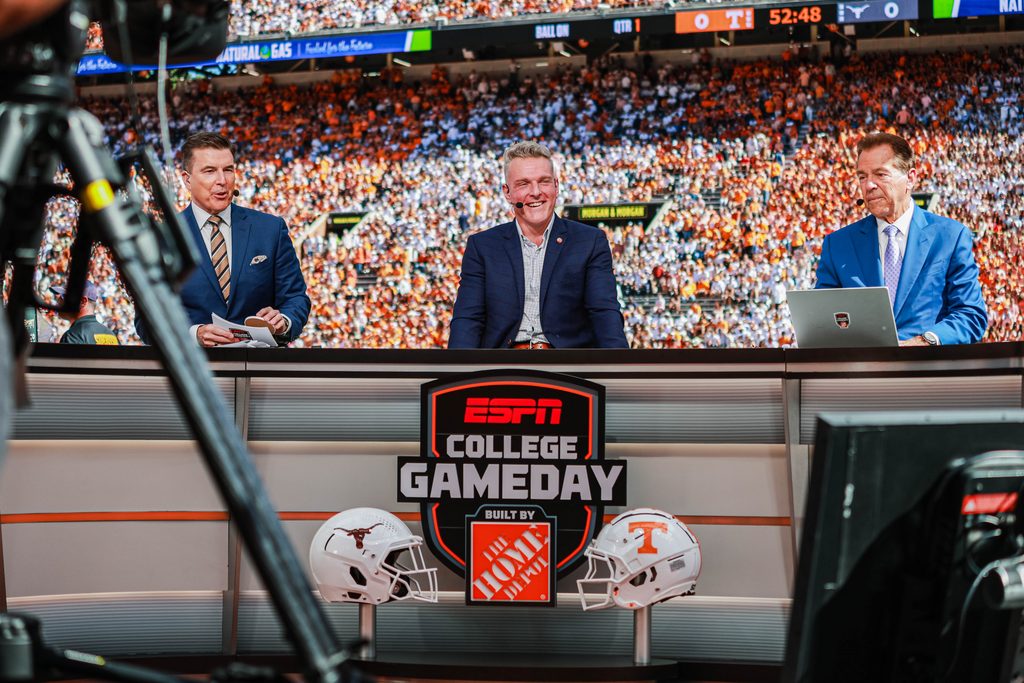
Texas remained No. 1 nationally after a 20-17 road victory over No. 14 Tennessee. Georgia stayed No. 2 following a 41-13 demolition of Oklahoma. Alabama moved to No. 7 after a 49-18 victory over South Carolina, while Florida exploded onto the national scene with a 52-28 victory over previously No. 4 Ole Miss. LSU also handled Texas A&M in a primetime showdown, 35-6.
The emergence of sleeper teams, such as Mississippi State, also strengthens the case as it demonstrates the depth of the conference. Ranked No. 16 in the recent AP Top 25, Kamario Taylor and the Bulldogs have been gradually maintaining national prominence, increasing the brand and adding to the strength of the SEC as a whole.
The SEC currently possesses five teams ranked inside the AP Top 10, with an additional five programs ranked in the Top 25. The combination of these programs gives the conference an extraordinary collection of potential playoff-caliber teams.
However, the SEC has not been perfect. Teams such as Arkansas and South Carolina have already suffered losses, while teams such as Auburn and Texas A&M have shown weaknesses after facing major setbacks. Still, the number of teams capable of competing nationally separates the SEC from the rest of the field.
2. Big Ten
The Big Ten has the strongest argument against the SEC, but Week 4 exposed enough weaknesses to keep the conference in second place.
Ohio State remains one of the nation’s premier teams. The Buckeyes defeated Illinois 42-19 in Week 4, while wide receiver Jeremiah Smith produced one of the weekend’s most spectacular performances with 12 receptions for 217 yards and four touchdowns.
Indiana also remained unbeaten, surviving Northwestern 29-23 to move to 4-0. UCLA, Iowa and Nebraska joined Indiana at 4-0, giving the Big Ten four unbeaten teams after four weeks. Oregon provided another significant boost with a 41-27 road victory over USC, while Michigan lost to Iowa, 20-19, after surrendering a last-second touchdown. These two matchups headlined the weekend for the Big Ten as all four teams were ranked in the Top 25 heading into the weekend.
The Big Ten remains loaded with talent and legitimate playoff contenders. Ohio State’s national championship pedigree, Indiana’s unbeaten start, Oregon’s road win at USC and the emergence of Iowa, Nebraska and UCLA provide considerable strength.
The gap between the SEC and Big Ten is not enormous, but the SEC’s superior performance against Power Four competition and greater concentration of highly ranked teams currently gives the conference down south the edge.
3. Big 12
The Big 12 occupies third place, but the conference has developed a legitimate group of contenders capable of making the national picture considerably more complicated.
Utah has been one of the conference’s most impressive teams. The Utes improved to 4-0 with a 31-17 road victory over Iowa State and currently sit at No. 13 in the AP poll. No. 12 Texas Tech has also remained unbeaten after opening conference play with a victory over Houston. BYU remains unbeaten as well and ranked in the top 10, although the Cougars have played only three games thus far.
The Big 12 also had a major victory over one of the Big Ten’s premier teams as Oklahoma State defeated Oregon in Stillwater, 39-31, marking one of the biggest upsets at this point of the season.
The conference also has several teams producing explosive offenses. Utah is averaging 43.3 points per game, while Houston is averaging 44.5 points per game through three games. BYU is averaging 44 points per game, with Cincinnati at 40.5.
Week 4 produced several notable conference games. Oklahoma State defeated West Virginia 41-24, Utah handled Iowa State 31-17, Cincinnati edged Kansas State 31-26, while UCF defeated TCU 21-13. Baylor also knocked off Deion Sanders’ Colorado Buffaloes 23-13.
The Big 12’s biggest limitation remains national depth compared with the SEC and Big Ten. Five Big 12 teams appeared in the latest AP Top 25, compared with 10 from the SEC and six from the Big Ten.
Utah, Texas Tech, BYU and Houston have created a compelling top tier. More high-end victories against national contenders will be necessary before the Big 12 can make a stronger case for moving ahead of the Big Ten.
4. ACC
The ACC has a strong top end but lacks the depth currently displayed by the SEC, Big Ten and Big 12.
Miami represents the conference’s clearest national contender. The Hurricanes improved to 4-0 after a 52-3 demolition of Central Michigan. Miami is currently ranked No. 4 nationally and has looked like one of the most complete teams in the nation, despite playing weaker competition.
The ACC’s biggest issue is depth.
Although the ACC produces good teams, Miami remains the conference’s only true contender for now. Teams such as SMU and Louisville carried high expectations coming into the season. Louisville defeated SMU 41-31 in its Week 3, Top 25 showdown, but fell to Wake Forest a week later.
Although the ACC has sleeper teams such as Duke, Virginia Tech, Pittsburgh and Virginia, the conference doesn’t have the depth of programs competing for national prominence on a week-to-week basis. Teams such as Florida State, NC State, Georgia Tech and even Clemson have shown major weaknesses and have struggled early in the year.
Miami could eventually change the national perception of the conference with additional high-profile victories. For now, however, one elite team and a handful of competitive programs do not provide the same overall strength demonstrated by the three conferences above.
Conference play is beginning to unfold, schedules will become substantially more difficult in October and head-to-head results will ultimately provide the clearest evidence. Through the opening month, however, the SEC has established the strongest overall profile, while the Big Ten remains the closest challenger. The Big 12 has positioned itself as a legitimate third option, while the ACC remains dependent on Miami and a smaller collection of contenders to close the gap.