
By Zion Murray
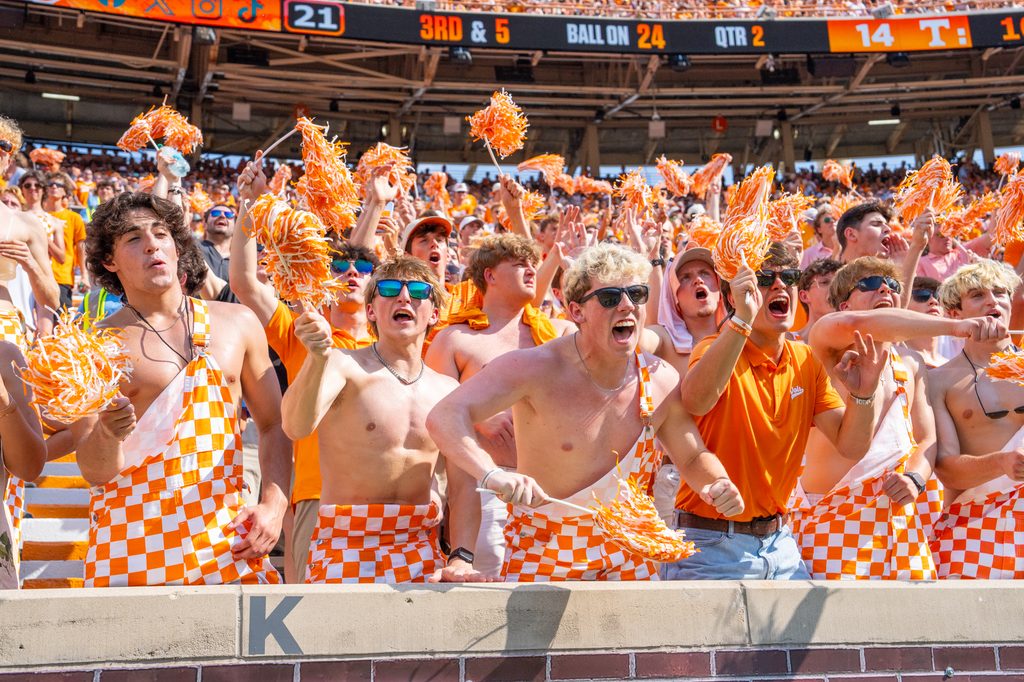
The University of Tennessee has no shortage of traditions. The orange-and-white uniforms, the Vol Walk and the team’s iconic entrance through the Power T all contribute to the atmosphere surrounding football in Knoxville. But few traditions are as instantly recognizable as the opening notes of “Rocky Top.”
Today, the song is practically synonymous with Tennessee football. Its upbeat melody echoes throughout Neyland Stadium, the crowd joins in, and the familiar “woo” has become part of the game-day experience.
Yet “Rocky Top” was not written for the Volunteers, nor was it originally intended to become a college football anthem. Before “Rocky Top” became a staple of Saturdays in Knoxville, it began as the work of husband-and-wife songwriting team Felice and Boudleaux Bryant. The Bryants wrote the song in 1967, and by the time it reached Neyland Stadium, it already had an audience and would find its perfect setting representing the Volunteers.
Its journey to the heart of Tennessee football began on Oct. 21, 1972, when the Volunteers welcomed third-ranked Alabama to Knoxville for a matchup between two of the SEC’s premier programs. The Volunteers entered the game ranked 10th nationally, setting the stage for a top-10 showdown in front of a Neyland Stadium crowd. Tennessee ultimately lost the matchup 17-10, but the afternoon produced a moment that would outlast the final score.
During halftime, the Pride of the Southland Marching Band performed “Rocky Top” to the Neyland crowd. The song caught on and resonated with fans, resulting in the classic being brought back time and time again. Thus, the tradition was established.
“Rocky Top” went from a popular country classic into something more closely associated with the Volunteers. Its quick tempo made it an ideal fit for a marching band, while its references to Tennessee gave fans a natural reason to embrace it.
Over time, the song became a fixture at athletic events, spreading beyond football and into the broader culture of the university. Although not the official fight song for the Vols, this song remained a special part of the university. In 1982, the song became one of Tennessee’s official state songs, further cementing its cultural significance.
More than five decades after its Neyland Stadium debut, “Rocky Top” has become a defining feature of the Tennessee sports experience. For generations of fans, the song connects childhood memories, family traditions and Saturdays in Knoxville. In a stadium filled with Tennessee orange, its opening notes can remind visiting teams that they are playing in one of college football’s most electric environments while those on Rocky Top sing about the place they call home.