
By Greyson McGinnis
College football is back. With the start of a new season, there will be speculation, there will be controversy, and there will be rankings. No position group in sports is more scrutinized than the quarterback.
Only 246 days until the NFL Draft gets underway in Washington, D.C.; who says it’s too early to think about the top prospects? From coast to coast, across multiple conferences, here are a few names to be aware of before Week 0 gets underway.
- Dante Moore, Oregon
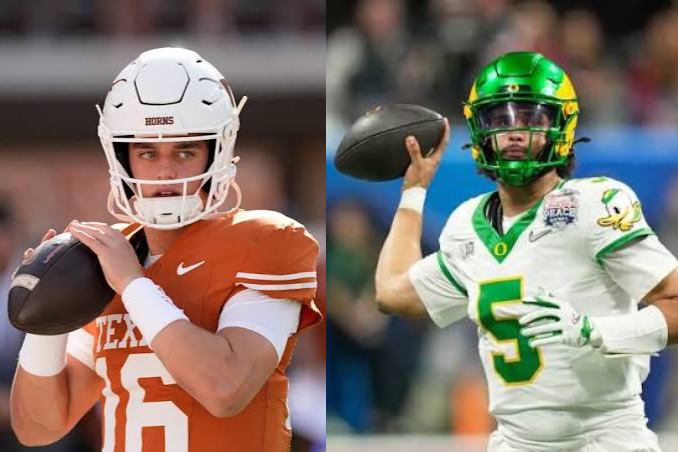
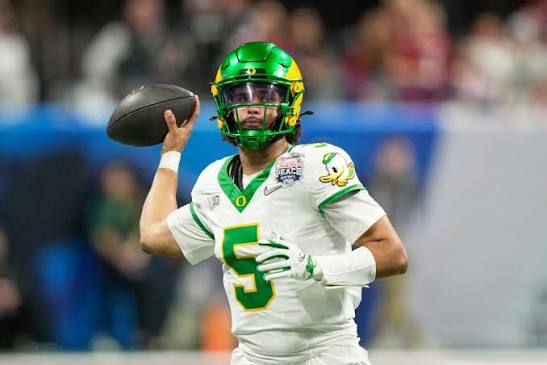
Dante Moore was all but a lock to go number two overall if he declared for the 2026 NFL Draft. He shined in the playoffs, except for the final game against Indiana. Moore plays with a smooth style throughout the game, unlike any quarterback in the class.
Moore has a quick, compact motion that allows him to deliver the ball to his receivers with enough speed to stay out of the way of the secondary. Moore excels at leading the leverage of the corner covering his receiver and timing his throw along with placement to pick up big yardage. Moore also uses his placement to give receivers chances to increase their yards after the catch.
Moore steps up into the pocket and connects with deep NFL-level throws. Moore also uses his ability to throw outside of the pocket on the move to decrease his chance of being pressured. Moore can layer his throws to be perfectly out of reach of the linebacker.
Moore struggles when pressure comes his way, causing him to panic and miss throws due to his poor reaction to pressure. Moore can even change his throwing motion too early when pressured, which further disrupts his accuracy. Moore has a tendency to stare down reads partially due to the Oregon coaching staff scheming players open, which sticks even when the scheme alone does not win.
The Oregon signal caller has the tools and abilities to be a great quarterback in the NFL, with a polish unlike many, but if he cannot learn to handle pressure, the NFL will be a difficult path for him.
- Arch Manning, Texas
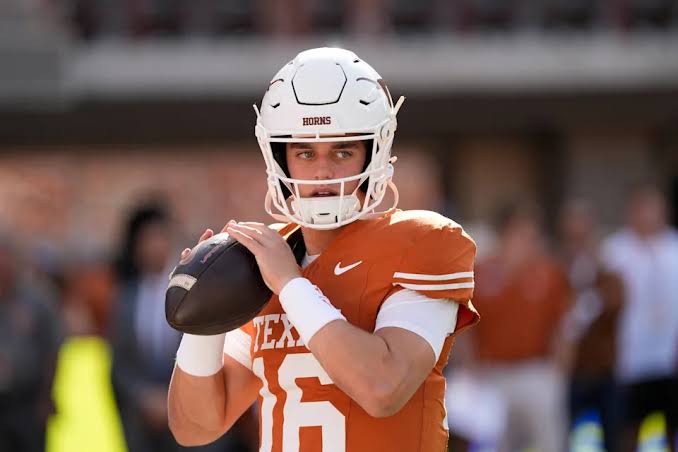
Arch Manning may be one of the most polarizing prospects before the season starts. Manning had a very crude awakening in his opening game last season against Ohio State and seemed to be one of the most overhyped players in recent college football memory for the first half of the season. Yet, Manning seemed to piece things together in the last half of the season and can solidify himself as a first-round pick.
Manning maneuvers the pocket better than most number one picks in the past ten years; that is what allows him to stay out of pressure. Manning can throw with a multitude of arm angles and still be accurate, and often relies on a sidearm throw. Manning has enough mobility to escape the pocket and turn it into positive yards with his long stride length. Manning excels in the face of pressure, identifying it early and releasing the ball before a defender can get to him.
Manning struggles in plenty of aspects still. He is inconsistent, to say the least, with his throwing motion. His throwing motion is the cause of most of his mid-to-deep passes missing right.
Manning does not feel the need to use his feet when setting to throw, which causes him to miss throws that should sometimes be the easiest pass on the field. Manning not setting his feet causes him to sail passes over the head of his receivers over the middle of the field. Manning’s feet seem to stem from his use of a sidearm, in which the mechanics are different.
The Texas quarterback has the mental ability to be a great NFL quarterback, but with inconsistent mechanics that cause every snap to feel like a gamble, Manning is just one bet I am not willing to take this preseason.
- LaNorris Sellers, South Carolina
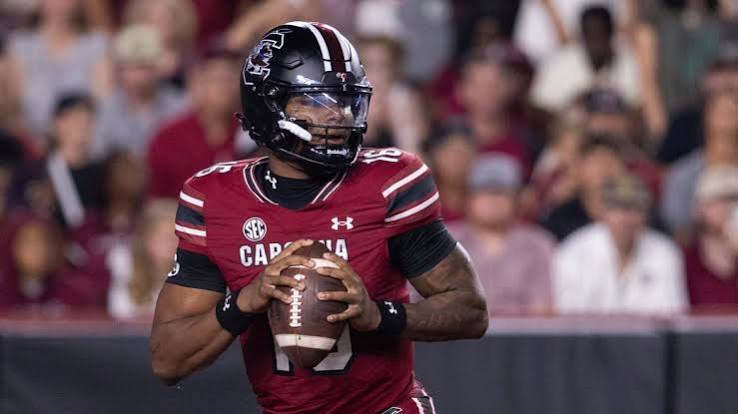
LaNorris Sellers is the classic story of being built better than any quarterback in the class, yet still working out how to use his tools. Sellers has the big arm, size, and speed, yet is not accurate with his traits.
The Gamecock can make any throw on the field, and particularly drops deep balls straight into the hands of the receiver. Sellers has the arm strength to add speed to his throws that rivals the best in the class. Sellers arm strength also adds the power of his throws that allows him to effortlessly hit opposite side of the field throws. Sellers runs with real strength and contact balance that allows him to be a difference maker as a rusher. Sellers added touch and placement to his game in the latter half of the season that allowed him to hit more throws outside of his typical high-speed passes.
Sellers has a tendency to try to do everything for the team when he needs to trust his teammates. Sellers can twist his wrist when he releases the ball, causing him to miss high as a result of releasing the ball early.
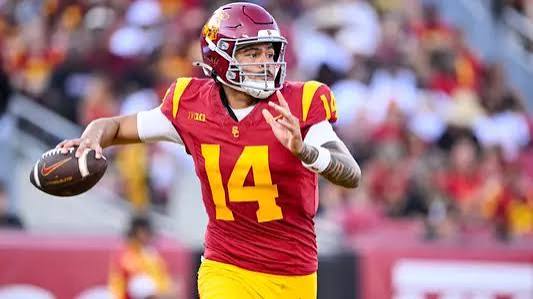
- Jayden Maiava, USC
Jayden Maiava is the best quarterback in the class in terms of throwing to all layers of the field. Maiava throws with perfect touch over linebackers and throws over the middle of the field. Maiava eats away at zone defense with his timing, manipulation of the defense with his eyes, and precision throws. Maiava deals with pressure well and moves in the pocket to avoid sacks. For a quarterback who was sacked 14 times last year, Maiava does well getting rid of the ball before the possibility of a sack.
The USC quarterback throws touch often and does not tend to put much power behind his throws. This causes his passes to float in the air for longer. When Maiava does decide he needs to put more power into his throws, a lot of his throwing motion comes from his shoulders, which does not generate stable power, causing him to surprisingly overthrow his targets.
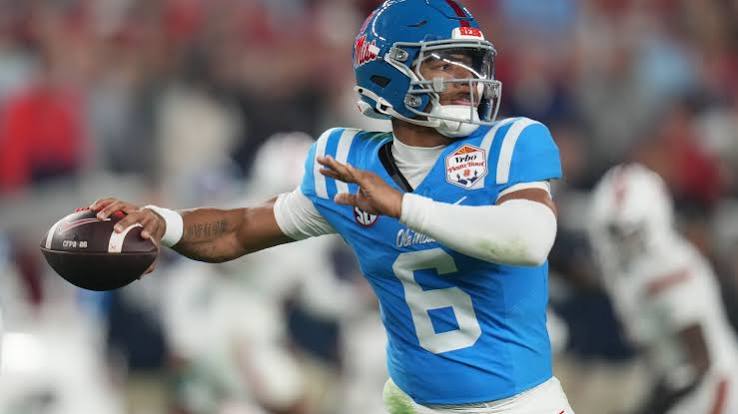
- Trinidad Chambliss, Ole Miss
Trinidad Chambliss had the chance to declare for the draft last year and likely would have been a first-round pick; however, he chose to return to college for his sixth year in college.
The Ole Miss quarterback throws the ball with a tight spiral that cuts through the wind. Chambliss is confident in his ability and will take risks that many quarterbacks often do not. Chambliss gets better as the game progresses, and he gets into a rhythm. Chambliss can throw on the move fluidly. Chambliss manipulates safeties with his eyes early into a play and reads their movement to decide how he will read the defense.
Chambliss has the downside of being one of the older prospects, being 24-years-old, in a class that will likely be a more stacked class than that of last year. Chambliss sometimes ignores secondary defenders like linebackers when progressing.
Chambliss does not read the leverage of corners well and makes mistakes with one-on-one plays in the short area of the field. Chambliss can be late on reads, mistime his release, and not anticipate breaks. Chambliss can put his whole body into throws and miss high because of it, as compensation for his lack of arm strength.
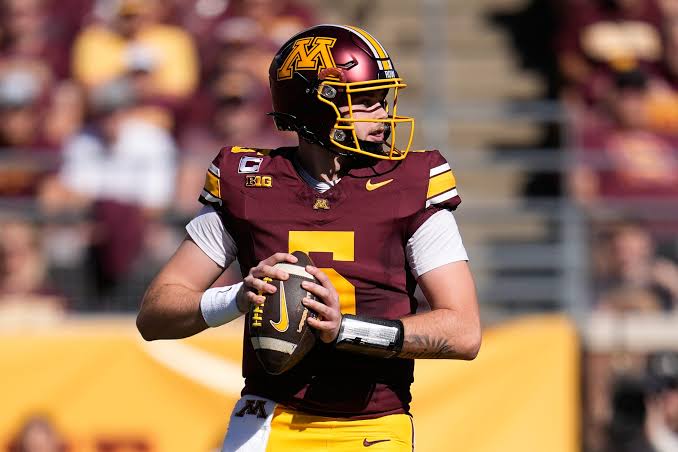
- Drake Lindsey, Minnesota
Drake Lindsey progresses through reads with quick and correct processing. Lindsey can throw with touch and place the ball where he wants it. Lindsey has the arm strength to make many of the throws he would be asked to at the next level.
The Golden Gopher keeps his accuracy on the move and even backing away from defenders. Lindsey has the ball speed to reach receivers with bullet passes. Lindsey throws over the middle of the field with confidence and vision, unlike many college quarterbacks.
Lindsey struggles with pressure and can get antsy, resulting in slower time from his decision to throw to his actual release. Lindsey does not have much athletic upside that is expected in today’s game. Lindsey is inconsistent and does not use his lower body to the best of his ability when throwing. Lindsey’s deep ball can have too much air under it, and he loses the ball speed that he typically throws with when he has to go beyond 20 yards.
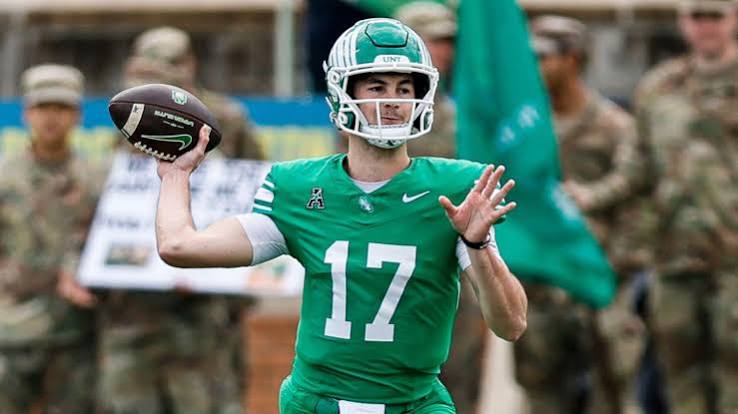
- Drew Mestemaker, Oklahoma State
Drew Mestemaker has been the talk of the town for analysts this offseason. During his first year starting at North Texas, he surpassed 5,000 passing yards, leading the FBS.
Moving on to Oklahoma State this offseason, Mestemaker moves through progressions and can identify parts of the defense pre-snap. Mestemaker can throw while on the move from both sides. Mestemaker is lanky and can deceive tacklers with his stride length and speed. Mestemaker’s internal clock that allows him to escape the pocket before it collapses, or often find running lanes left open to pick up yardage, is spectacular. Mestemaker has the ability to lead a two-minute drill drive with poise.
Mestemaker struggles with all of his entire throwing motion. Mestemaker does not use his feet to benefit him when he throws, while not having a particularly quick or compact throwing motion. Mestemaker has the tendency to throw with just his upper body, which can lead to accuracy issues.
Mestemaker has not yet learned to throw with the anticipation of a receiver’s breaks in routes. Mestemaker can try to do too much with his throws and go for the touchdown every time rather than setting up plays for better success later on.
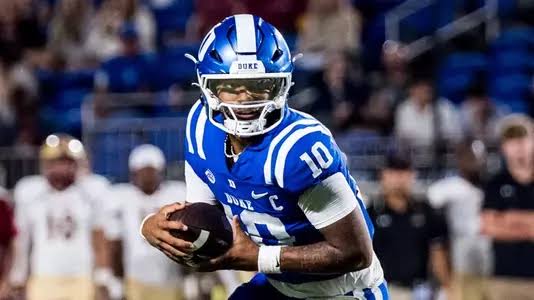
- Darian Mensah, Miami
Darian Mensah showed his ability last year at Duke and now gets to improve it at the University of Miami.
Mensah will stand in the pocket and still deliver with pressure in his face. Mensah reads the field well when given time. Mensah can place the ball well from medium to short areas of the field. Mensah makes a conscious effort to manipulate defenders with his eyes and identifies primary and secondary defenders.
Mensah does not have his throwing motion figured out yet, nor his footwork. Mensah can be slow to make reads past his first read, and linger too long to miss open targets. Mensah’s power does not translate to the speed at which the ball comes out of his hand, and with his inconsistent motion comes inconsistent power. Mensah gets surprised by pressure and does not feel it well. Mensah is unable to roll out left and complete a throw.
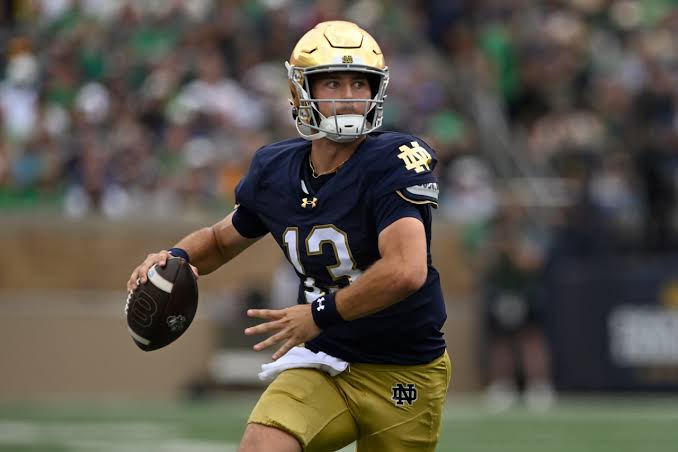
- CJ Carr, Notre Dame
CJ Carr throws a very catchable ball that does not bounce around in the hands of his receivers. Carr throws with touch and has a consistent, fast throwing motion. Carr moves through progressions well and has the arm strength to make deep throws. Carr also has the ability to make throws while on the move with good accuracy. Carr throws with anticipation often.
The Notre Dame quarterback struggles to have placement with even short area throws. Carr has difficulty with deep throws, which are often inaccurate. Carr struggles identifying coverage pre-snap, and when the defense plays zone, he does not release the ball with enough timing to take advantage. Carr attempts side-arm throws with little success.
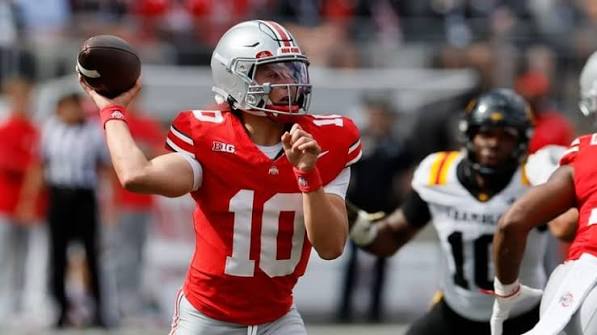
10. Julian Sayin, Ohio State
Julian Sayin uses his body to fully step into throws and can complete throws while on the move. Sayin stands in the pocket while under pressure and delivers. Sayin runs play-action well, attempting to fool the defense. Sayin can layer throws decently. Sayin is still accurate despite interesting mechanics.
The Ohio State quarterback lacks the ability to be able to make throws as deep and in stride as you want at the NFL level. Sayin also has to take a deep drop back, over-rotates in his throwing motion, and lacks power, all likely due to his below-average size at quarterback. Sayin has a tendency to stare down his targets, does not often throw with anticipation, and is late to read the play.
Sayin will be unlikely to declare this year, barring a monster year from the junior.
Wow ! Thanks for the inside information on the QBs mechanics and physical abilities. Looking forward to reading more if your articles.
Very thoughtful, enjoyed the comparisons.